

Affiliate marketing can feel confusing when you are starting out. Dozens of networks, thousands of individual programs, different approval standards, and commission termscan change without much notice.
The good news is that you do not need to join every network. Most beginners are better served by choosing one or two platforms that match their niche, audience, location, and promotional method. Once you know which products and content formats resonate with your audience, you can expand.
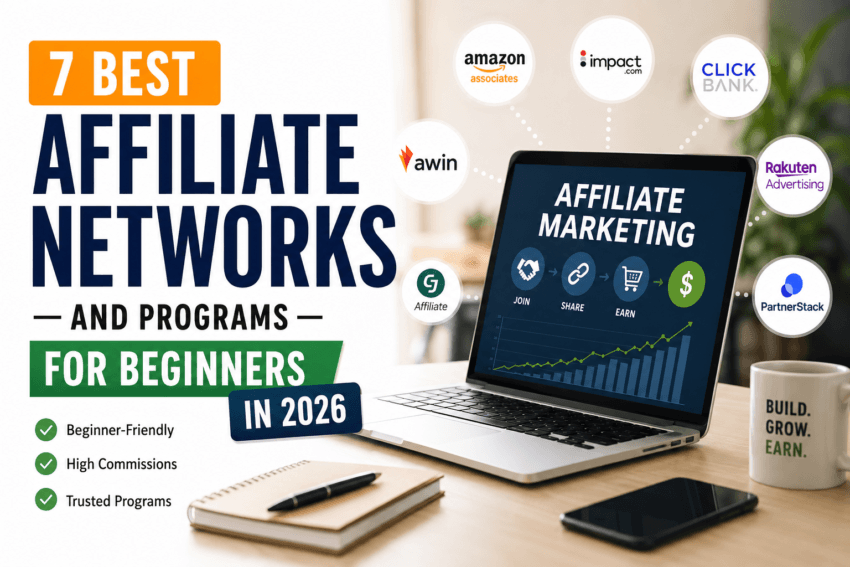
This guide compares seven affiliate networks and programs worth considering in 2026: Amazon Associates, Awin, impact.com, ClickBank, CJ Affiliate, Rakuten Advertising, and PartnerStack.
Affiliate Disclosure: This article contains affiliate links. If you join Wealthy Affiliate through one of my links, I may earn a commission at no additional cost to you. I only recommend products and services I have personally used or genuinely believe provide value to my readers. All opinions expressed in this review are my own.
Important: Affiliate programs regularly change their commission rates, tracking windows, payment terms, eligibility requirements, and participating advertisers. Availability also varies by country. Verify the current terms on the program’s official website before applying.
How We Chose These Affiliate Platforms
No single affiliate network is universally best. For this guide, the platforms were evaluated using factors that matter to new publishers:
- Ease of application and onboarding
- Range and relevance of available products or advertisers
- Suitability for newer or lower-traffic publishers
- Reporting, tracking, and link-management tools
- Payout accessibility and supported payment methods
- Geographic and promotional-channel availability
- Educational resources and publisher support
The labels below describe the use case in which each platform is strongest. They do not guarantee acceptance, earnings, or access to any particular advertiser.
Quick Comparison
| Platform | Main focus | Approval process | Commission and tracking | Payments | Best fit |
|---|---|---|---|---|---|
| Amazon Associates | Physical products and Amazon services | Amazon reviews the application after three qualifying sales within 180 days; content requirements apply | Category-based rates; standard shopping session is relatively short | Methods and thresholds vary by country | Product-led consumer content |
| Awin | Retail, ecommerce, travel, finance, and lifestyle brands | Network verification plus separate approval from many advertisers | Varies by advertiser | Schedule and methods vary by market | Broad multi-brand coverage |
| impact.com | Retail, technology, services, and creator partnerships | Platform onboarding plus brand-level approval | Varies by brand | Bank and PayPal options are available in supported markets | Creators seeking structured brand partnerships |
| ClickBank | Digital products, subscriptions, and direct-response offers | Marketplace access is comparatively straightforward, subject to account and regional eligibility | Set at offer level; recurring and one-time models may be available | Threshold, customer-distribution, and account requirements apply | Publishers prepared to vet digital offers carefully |
| CJ Affiliate | Major retail, travel, finance, and service advertisers | Network account plus advertiser-level approval | Varies by advertiser | Depends on country and account settings | Growing publishers with established content |
| Rakuten Advertising | Retail and consumer brands | Network and advertiser review | Varies by advertiser | Methods and timing vary by country | Established retail-oriented publishers |
| PartnerStack | B2B software and SaaS | Marketplace and program-level applications | Varies by software company; recurring models are common but not universal | Supported withdrawals may include PayPal, Stripe, or direct deposit | Software, marketing, and business content |
What Is Affiliate Marketing?
Affiliate marketing is a performance-based marketing model in which a publisher earns a commission for referring customers or leads to another company.
The basic process is:
- Join an affiliate program or network.
- Receive a unique tracking link.
- Recommend a relevant product or service through your content.
- A visitor clicks your link.
- If that visitor completes a qualifying action under the program’s rules, you may earn a commission.
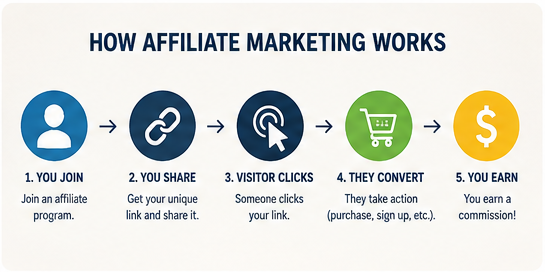
That qualifying action could be a purchase, subscription, free-trial registration, lead, or another conversion the advertiser defines.
Affiliate marketing can work with blogs, YouTube channels, social media accounts, newsletters, podcasts, and other content formats, though not every affiliate program allows every promotional method.
Not sure where to begin?
Don’t try to master every network at once. Pick one platform that matches the type of products you already talk about and learn how its tracking, links, and reporting work.
Start by comparing the seven beginner-friendly options below.
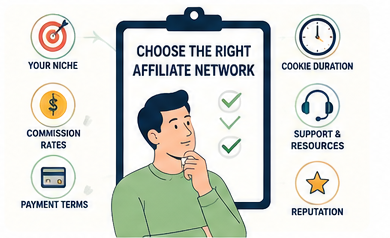
Best Affiliate Networks and Programs for Beginners in 2026
1. Amazon Associates — Best for Physical Products
Amazon Associates is one of the most well-known affiliate programs for publishers who recommend physical products.
Its main advantage is product variety. Publishers in niches such as books, home improvement, photography, beauty, hobbies, cooking, and consumer electronics can usually find relevant products to discuss.
Amazon is easy for shoppers to recognize, but its publisher requirements are more demanding than the word “beginner-friendly” sometimes suggests. In the United States, applicants currently need at least three qualifying sales within their first 180 days. Amazon also reviews the originality and recency of the sites supplied in the application. Its guidance suggests roughly ten original posts, and social-media applicants generally need an established public account with a substantive organic following—often at least 500 followers.
Pros
- Enormous range of consumer products
- Familiar shopping experience
- Useful for product reviews, comparisons, tutorials, and buying guides
- Accepts qualifying websites and certain established public social accounts
Cons
- Commission rates vary by category and can be modest
- The standard shopping session is relatively short
- Detailed rules govern links, pricing references, trademarks, and disclosures
- Applicants must generate three qualifying sales within 180 days and pass a content review
Best for
Publishers and creators with original, product-focused content and an existing audience, even if that audience is still relatively small.
Beginner tip: Build useful content before applying. Do not choose products solely because they are expensive; recommend products that solve the problem your visitor came to address.
Review the Amazon Associates requirements →
2. Awin — Best All-Around Affiliate Network
Awin is a large global affiliate network with advertisers across retail, ecommerce, travel, finance, telecommunications, and other sectors.
Awin is especially relevant in 2026 because ShareASale is no longer a separate platform. Awin migrated active ShareASale customers in 2025, and the standalone ShareASale platform closed on October 6, 2025.
Publisher registration involves verification, and a small refundable verification deposit may apply depending on the market and sign-up route. Joining Awin does not automatically grant access to every advertiser; many brands review applications separately.
Pros
- Broad advertiser selection across industries and markets
- Suitable for websites and some social-first publishers
- Established reporting and affiliate infrastructure
- Incorporates the active customers migrated from ShareASale
Cons
- Registration includes a verification process
- Individual advertisers can approve or decline applications
- The size of the marketplace can initially feel overwhelming
- Available advertisers and payment arrangements differ by market
Best for
Publishers who want access to multiple brands across retail, lifestyle, ecommerce, travel, and related consumer categories.
Explore Awin for publishers →
3. impact.com — Best for Brand and Creator Partnerships
impact.com is a partnership-management platform used for affiliate, creator, referral, and other performance-based relationships.
Its marketplace and reporting tools can suit creators who want a structured way to discover brands, manage links, and monitor performance. However, creating a platform account does not guarantee acceptance by an individual brand, and every brand controls its own commercial terms.
Pros
- Strong reporting, tracking, and link-management tools
- Marketplace for discovering potential partnerships
- Supports traditional publishers and content creators
- Bank and PayPal withdrawal options in supported markets
- Useful for longer-term brand relationships
Cons
- Individual brands can decline applications
- Commission rates, locking periods, and tracking terms vary by brand
- The interface may be more detailed than a beginner needs at first
Best for
Creators and publishers covering technology, software, education, lifestyle, ecommerce, and other brand-friendly topics.
Explore partnerships on impact.com →
4. ClickBank — Best Marketplace for Carefully Vetted Digital Offers
ClickBank is best known for digital products, subscriptions, direct-response offers, and information products.
Its marketplace includes products in numerous niches, and some offers pay a higher percentage than physical-product programs. That potential shouldn’t replace due diligence. Product quality, refund patterns, landing-page claims, and customer experience can vary significantly.
Reaching the payment threshold is not the only payout requirement. ClickBank currently requires an account to satisfy its Customer Distribution Requirement, which includes generating at least five sales. Its default payment threshold is $100, although account holders can adjust it within the permitted range. Return allowances, refunds, and account status can also affect payments.
Pros
- Strong focus on digital products and subscriptions
- Many niche categories
- Some offers provide recurring or higher-percentage commissions
- Straightforward marketplace format
Cons
- Product quality and positioning vary substantially
- Payouts require more than merely reaching the payment threshold
- Refunds and return allowances can affect earnings
- Health, financial, and other regulated niches require special care
Best for
Publishers are willing to test or closely evaluate digital products before recommending them.
Beginner tip: Never promote an offer solely because it advertises a large commission. Review the product, sales page, refund policy, and customer experience first.
Browse ClickBank’s affiliate marketplace →
5. CJ Affiliate — Best for Growing Publishers
CJ Affiliate is an established network connecting publishers with advertisers across retail, travel, finance, technology, and other sectors.
CJ can be useful once you have a clear niche, a growing content library, and a credible promotional plan. Newer publishers can apply, but advertiser-level approval is not automatic, and established content generally makes an application more compelling.
Pros
- Large, established advertiser ecosystem
- Detailed reporting and link tools
- Suitable for publishers building several advertiser relationships
- Coverage across multiple commercial sectors
Cons
- More complex than a simple single-merchant program
- Advertisers set their own acceptance criteria and commercial terms
- Not every program will accept a new or low-traffic publisher
Best for
Growing blogs, editorial sites, review publishers, and creators with consistent content and a defined audience.
Explore CJ Affiliate for publishers →
6. Rakuten Advertising — Best for Established Retail Partnerships
Rakuten Advertising operates a global affiliate network focused on retail and consumer brands.
It can be valuable for publishers whose content and audience align with established retailers. It is included here as a growth-stage option rather than the easiest first network: network enrollment does not guarantee advertiser approval, and publishers with developed commercial content may have an advantage.
Pros
- Established international affiliate platform
- Strong alignment with retail and consumer content
- Multiple payment methods in supported markets
- Useful for publishers seeking recognized retail relationships
Cons
- Advertiser acceptance is not automatic
- Payment options and program availability vary by country
- May be less immediately accessible than a single-merchant program
Best for
Fashion, lifestyle, retail, and consumer-product publishers with established content or an audience that matches participating brands.
Explore Rakuten Advertising’s affiliate network →
7. PartnerStack — Best for B2B and SaaS Content
PartnerStack focuses heavily on partner programs for B2B software and SaaS companies.
That specialization makes it relevant to software tutorials, business-tool comparisons, marketing guides, and educational content for professional users. Individual companies set their own approval, attribution, and commission terms, so don’t assume recurring commissions unless a program explicitly offers them.
Pros
- Strong focus on SaaS and B2B products
- Good fit for tutorials, comparisons, and software roundups
- Opportunities for affiliate and other partner relationships
- Centralized marketplace and payment workflow
Cons
- Limited fit for physical-product creators
- Each program controls approval and commission terms
- Earnings can be delayed if a company has invoicing or payment delays
Best for
SaaS bloggers, software reviewers, business creators, marketers, consultants, and technology educators.
Discover programs on PartnerStack →
Which Affiliate Platform Should You Choose?
Use your content and audience—not a headline commission rate—to narrow the field.
| Your content | Good starting options |
| Physical-product reviews | Amazon Associates, Awin |
| General lifestyle content | Awin, impact.com |
| Software and SaaS | impact.com, PartnerStack |
| Digital products | ClickBank, after careful offer review |
| Growing editorial sites | CJ Affiliate, Awin, impact.com |
| Retail and ecommerce | Amazon Associates, Awin, CJ Affiliate |
| Established retail content | Rakuten Advertising |
| Creator-brand partnerships | impact.com, Awin |
These are starting points, not guarantees. Available programs can vary by country, niche, traffic source, audience profile, and promotional method.
Before applying, ask:
Can I evaluate the products well enough to make trustworthy recommendations?
Does this platform have products my audience already needs?
Is my website or social account eligible and ready for review?
Does the program permit my planned promotional channels?
Can I meet the payout and tax documentation requirements in my country?
Affiliate Marketing Tips for Beginners
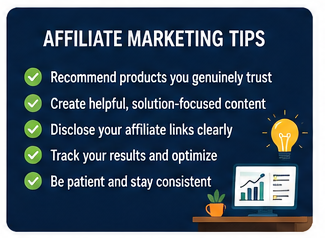
Start with one or two platforms
Joining seven networks immediately creates administrative work without creating traffic. Begin with one or two closely aligned options, then add another platform only when you have a specific advertiser or content opportunity in mind.
Create content around problems, not links
A useful article should help the reader even if no one clicks an affiliate link. Effective affiliate content can include:
- Original product testing and observations
- Detailed comparisons
- Tutorials and setup guides
- Buying guides
- Alternatives and use-case breakdowns
- Balanced reviews that identify meaningful drawbacks
Avoid pages that merely repeat a merchant’s product description.
Recommend selectively
Trust compounds. A reader who has a good experience with one recommendation is more likely to consider another later. Relevance, evidence, and product quality matter more than the largest advertised commission.
Track every campaign
Use platform tracking tools and maintain a simple record containing:
- Network and advertiser
- Affiliate URL
- Content containing the link
- Commission structure and tracking window
- Application status
- Disclosure and promotional restrictions
- Date the terms were last checked
Do not automatically reuse the same link everywhere
A link permitted on a website may not be permitted in an email, private message, paid advertisement, downloadable file, or another promotional channel. Check the network rules, advertiser agreement, and platform policy before expanding a campaign.
Affiliate Disclosures: What Beginners Need to Know
If you receive compensation from an affiliate recommendation, readers should be able to understand that relationship before acting on the recommendation.
For content that can affect US consumers, Federal Trade Commission guidance says disclosures should be clear, conspicuous, and difficult to miss. They should appear with or close to the endorsement—not only on an About page or at the bottom of a long article.
A straightforward disclosure is:
Disclosure: I may earn a commission if you purchase through links in this post, at no additional cost to you.
Do not rely solely on a phrase such as “affiliate link” if it does not clearly communicate that you may receive compensation. In videos, the disclosure may also need to appear in the video itself, not just in the description. Individual affiliate programs can impose additional wording and placement requirements.
This section is general information, not legal advice. Follow the rules applicable to your program, publishing platform, audience, and jurisdiction.
Frequently Asked Questions
Do I need a website for affiliate marketing?
Not always. Some programs accept qualifying social media creators and other publisher types. Requirements vary, and an established website can make it easier to demonstrate your niche, content quality, and promotional approach.
What is the easiest affiliate program for beginners?
There is no universal easiest option. Amazon Associates can be practical for original physical-product content, but applicants must generate three qualifying sales within 180 days and pass Amazon’s review. ClickBank offers access to many digital offers, but those offers require careful vetting. Awin and impact.com offer broader marketplaces but often require platform- and advertiser-level approval.
Choose according to product fit and application readiness—not perceived approval ease alone.
How do affiliate marketers get paid?
Depending on the platform and country, payment methods can include bank transfer, PayPal, Stripe, check, or other supported services. Thresholds, validation periods, locking periods, and payment schedules vary. Check the current payment documentation before joining.
Can I use affiliate links on YouTube, TikTok, Instagram, or other social platforms?
Some programs support social promotion, but permission is not universal. Check the affiliate agreement and the social platform’s current policies. Clearly disclose the commercial relationship to viewers.
How many affiliate networks should a beginner join?
Usually one or two relevant platforms are enough. It is more useful to learn which content converts and which products serve your audience than to maintain inactive accounts across numerous networks.
What happened to ShareASale?
Awin completed migrating active ShareASale customers to its platform in 2025. The standalone ShareASale platform closed on October 6, 2025. A 2026 comparison should therefore list Awin rather than treating Awin and ShareASale as separate networks.
Final Thoughts
You do not need seven affiliate accounts to begin. You need one relevant platform, useful content, a compliant application, and an audience that trusts your recommendations.
For physical products, compare Amazon Associates and Awin. For SaaS and software content, investigate impact.com and PartnerStack. ClickBank may suit carefully evaluated digital offers. CJ Affiliate and Rakuten Advertising are more compelling as your content, audience, and advertiser relationships develop.
Check your eligibility, prepare your best content for review, and apply when you can clearly explain how you will create value for both readers and advertisers.
Ready to Start Affiliate Marketing?
Choose the platform that best matches your niche:
- Physical products: [Get Started with Amazon Associates →]
- Multiple brands and niches: [Explore Awin →]
- Brand and creator partnerships: [Explore Impact →]
- Digital products: [Browse ClickBank →]
- Growing publishers: [Explore CJ Affiliate →]
- Retail partnerships: [Explore Rakuten Advertising →]
- SaaS and B2B: [Explore PartnerStack →]
Pick one network, create your first useful piece of affiliate content, and start testing what works with your audience.