

SEO Title: Dropshipping vs Affiliate Marketing in 2026: Which Is Better?
Meta Description: Compare dropshipping and affiliate marketing in 2026, including costs, profit potential, risks, workload, and which online business model best suits beginners.
Suggested Slug: dropshipping-vs-affiliate-marketing
If you want to build an online business in 2026, you’ll likely encounter two models: dropshipping and affiliate marketing.
Both let you earn from products without manufacturing them yourself, but they operate very differently.
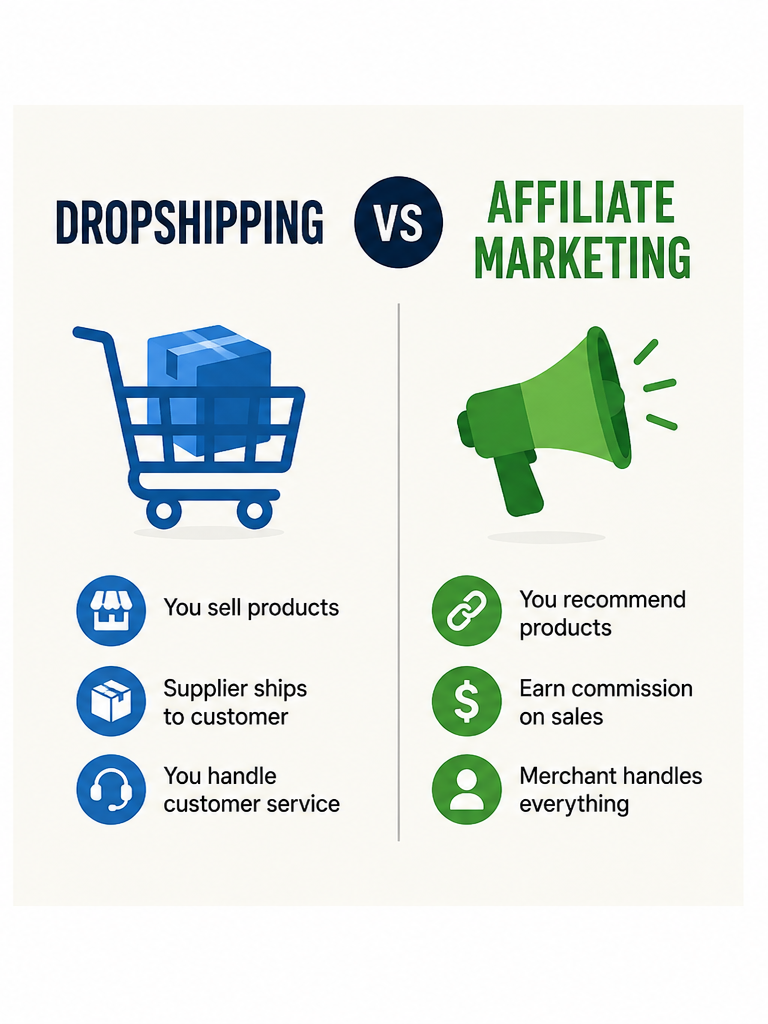
With dropshipping, you run an e-commerce store and sell products directly to customers while a supplier handles fulfillment. With affiliate marketing, you recommend another company’s products or services and may earn a commission when someone completes a qualifying action through your affiliate link.
Neither is an easy-money shortcut. Both require marketing skills, consistent effort, experimentation, and realistic expectations.
Here’s how dropshipping vs affiliate marketing compares in 2026—and how to decide which may be better for you.
Affiliate Disclosure: This article contains affiliate links. If you join Wealthy Affiliate through one of my links, I may earn a commission at no additional cost to you. I recommend only products and services I have personally used or genuinely believe will add value for my readers. All opinions expressed in this review are my own.
Dropshipping vs Affiliate Marketing: What’s the Difference?
How Dropshipping Works
Dropshipping is an ecommerce fulfillment model.
A customer buys a product from your online store, but instead of keeping inventory, you forward the order to a supplier that ships the product directly to the customer.
You still operate the storefront and generally manage customer communication, returns, refunds, disputes, and the overall shopping experience.
Your profit is not simply the selling price minus the supplier’s price. You also need to consider expenses such as payment-processing fees, shipping, advertising, software, refunds, taxes, and other operating costs.
How Affiliate Marketing Works
With affiliate marketing, you don’t sell the product directly.
Instead, you recommend another company’s product or service through a website, social media, YouTube, email, or another permitted channel.
If someone follows your tracked affiliate link and completes a qualifying purchase or action, you may earn a commission under the program’s terms.
The merchant typically handles payment, fulfillment, returns, and customer service.

Dropshipping vs Affiliate Marketing: Quick Comparison
| Factor | Dropshipping | Affiliate Marketing |
|---|---|---|
| Sell directly to customers | Yes | No |
| Hold inventory | Usually no | No |
| Customer service | Usually your responsibility | Merchant handles it |
| Startup expenses | Often higher | Can be lower |
| Pricing control | Usually some | Usually none |
| Income | Retail margin | Commission |
| Operational workload | Higher | Generally lower |
| Brand control | Higher | Primarily your content/audience |
| Paid advertising required | No | No |
| Guaranteed income | No | No |
1. Startup Costs
Affiliate marketing generally has a lower financial barrier to entry.
You can potentially start creating content using platforms you already have. A website, hosting, email software, SEO tools, or advertising may add expenses, but you don’t necessarily need all of them immediately.
Dropshipping usually requires more infrastructure. Depending on your setup, costs may include an e-commerce platform, domain, apps, payment processing, product samples, advertising, returns, and customer service tools.
Neither model is truly “free,” but affiliate marketing can be easier to test with a smaller initial budget.
2. Customer Service and Workload
Dropshipping requires more day-to-day operational involvement.
If a package is late, damaged, incorrect, or missing, customers usually contact your business. You may need to handle refunds, returns, chargebacks, and supplier problems.
Affiliate marketers normally avoid these responsibilities because the merchant completes the transaction.
However, that doesn’t make affiliate marketing passive.
Successful affiliates still need to research products, create and update content, attract visitors, maintain links, analyze results, and adapt when platforms or affiliate programs change.
3. Control and Branding
Dropshipping gives you more control over your store.
You can determine your branding, product selection, pricing strategy, store design, and customer experience. However, you still depend heavily on suppliers for product quality and fulfillment.
Affiliate marketers control their content but have limited control once visitors reach a merchant’s website.
Affiliate programs can change commissions, products, tracking rules, terms, or even close.
This is why building an audience that trusts you can be more valuable than depending on one affiliate program.
Want to build an affiliate business around helpful content rather than chasing quick commissions? Explore practical beginner guides at EasyMonitize.
4. Which Has Better Profit Potential?
There is no reliable answer to which model makes more money.
Dropshipping may generate more revenue per transaction because you’re selling the product yourself. But revenue isn’t profit.
Supplier costs, shipping, advertising, transaction fees, refunds, software, and other expenses can reduce your margins.
Affiliate marketers receive only a commission and generally don’t pay for manufacturing, fulfillment, shipping, or customer returns.
Actual earning potential depends on your niche, audience, traffic, conversion rates, expenses, and execution.
Be cautious of anyone promising specific income simply because you choose one model over the other.
5. Traffic and Marketing
Both models need traffic.
Dropshippers and affiliates can use strategies such as:
- SEO
- Social media
- Email marketing
- Video content
- Creator partnerships
- Paid advertising
Paid advertising is not required for either model.
Similarly, affiliate marketing doesn’t have to depend entirely on Google rankings. Diversifying traffic sources can reduce your dependence on one search engine, social platform, or advertising network.
6. Risks to Consider
Dropshipping and affiliate marketing have different risks.
Dropshipping risks can include:
- Supplier quality problems
- Shipping delays
- Refunds and chargebacks
- Thin margins
- Advertising costs
- Customer-service demands
Testing suppliers and ordering samples before heavily promoting products can help identify quality and fulfillment problems.
Affiliate marketing risks can include:
- Commission changes
- Affiliate program closures
- Tracking changes
- Search algorithm updates
- Social-platform policy changes
- Dependence on one traffic source
Diversifying merchants and traffic sources can reduce—but never eliminate—some of these risks.
Affiliate Disclosures and Trust
Transparency is especially important in affiliate marketing.
If you may receive compensation when someone purchases through your link, disclose that relationship clearly and conspicuously where readers are likely to notice it.
Don’t assume that simply writing “affiliate link” will always clearly communicate the financial relationship.
Your recommendations should also represent your genuine assessment.
If you’ve personally used a product, explain your actual experience. If you haven’t used it, don’t imply that you have. Instead, explain how you evaluated it through research, documentation, demonstrations, specifications, or other reliable information.
Long-term affiliate marketing depends heavily on reader trust.
Can You Do Dropshipping and Affiliate Marketing at the Same Time?
Yes.
A dropshipping store could use affiliate partnerships for complementary products it doesn’t sell, while an affiliate publisher might eventually launch its own ecommerce products.
However, beginners don’t necessarily need to do both.
Each additional business model creates more marketing, tools, policies, tracking, and management responsibilities. Learning one model well before expanding can make the process easier.
Which Is Better for Beginners?
Affiliate marketing may suit you if you:
- Have a smaller starting budget
- Enjoy creating useful content
- Don’t want to manage orders
- Want to build an audience
- Are comfortable with commissions and less control
Dropshipping may suit you if you:
- Want to operate an ecommerce store
- Prefer greater control over branding and pricing
- Are comfortable managing customers
- Can research and test suppliers
- Don’t mind additional operational responsibilities
Neither is automatically better.
The right choice depends on the kind of business you actually want to operate.
Frequently Asked Questions
Is dropshipping still worth it in 2026?
Dropshipping remains a legitimate e-commerce fulfillment model. Whether a particular store succeeds depends on its products, suppliers, margins, customer experience, competition, and marketing—not simply the fulfillment method.
Is affiliate marketing still worth it in 2026?
Affiliate marketing remains a viable monetization model for publishers and creators who can attract relevant audiences and make useful recommendations. However, it requires more than publishing affiliate links and waiting for commissions.
Is affiliate marketing passive income?
Not entirely. Older content can still generate traffic and commissions, but affiliate businesses still need updates, new content, link maintenance, analytics, compliance, and adaptation.
Which costs less to start?
Affiliate marketing can generally be tested with lower upfront expenses because you aren’t operating the e-commerce transaction or fulfillment process.
Do I need paid advertising?
No. Both models can use organic and paid traffic strategies. Avoid spending heavily on advertising until you understand your costs and can measure campaign profitability.
Dropshipping vs Affiliate Marketing: Final Verdict
There is no universal winner.
Choose dropshipping if you want to run an ecommerce store, control more of the customer experience, build your own storefront, and take on greater operational responsibility.
Choose affiliate marketing if you prefer creating content, building an audience, recommending useful products, and avoiding most fulfillment and customer-service responsibilities.
Most importantly, don’t choose either because someone promises fast or effortless money.
Both require work, testing, patience, and the ability to adapt.
Instead of asking, “Which one will make me money faster?”, ask:
“Which business am I willing to learn and work on consistently?”
That is usually the more useful question.
Ready to learn more about building an affiliate business? Visit EasyMonitize for practical guides that help beginners build smarter, more sustainable affiliate marketing strategies.