

Social media can introduce people to your content. Search engines can bring visitors to your website. But both depend on platforms you don’t control.
An email list gives you something different: a direct, permission-based way to stay in touch with people who have chosen to hear from you.
That can be valuable for affiliate marketing, but there’s an important distinction. Your goal shouldn’t be to collect email addresses so you can send people affiliate offers.
Build a newsletter people would want to receive even if it contained no affiliate links at all.
Please do that well; relevant product recommendations can become a natural part of the relationship.
Affiliate Disclosure: This article contains affiliate links. If you join Wealthy Affiliate through one of my links, I may earn a commission at no additional cost to you. I recommend only products and services I have personally used or genuinely believe will add value for my readers. All opinions expressed in this review are my own.
Why Build an Email List for Affiliate Marketing?
Someone who visits one blog post may leave and never return. A subscriber permits you to continue the conversation.
With email, you can:
- Share useful new content.
- Help readers solve specific problems
- Bring people back to your website.
- Recommend relevant products or services.
- Learn which topics interest your audience
- Build relationships over time.
It also reduces your dependence on any single social-media feed or search platform.
You still depend on your email provider and successful inbox delivery, so an email list isn’t something you completely “own.” The advantage is having a more direct connection with an audience that deliberately subscribed.
1. Choose an Email Marketing Platform
You don’t need the most advanced platform available.
For a beginner, prioritize:
- Sign-up forms and landing pages
- Automated welcome emails
- Subscriber segmentation
- Analytics
- Easy unsubscribe management
- Pricing that makes sense at your current list size
Platforms such as Kit, MailerLite, and GetResponse offer combinations of these features, but don’t assume that every email service allows every type of affiliate promotion.
Policies differ and can change.
Some providers permit relevant affiliate links within original content while restricting accounts primarily devoted to third-party promotions.
Before choosing a provider, check its current acceptable-use and affiliate-marketing policies, along with the rules of the affiliate programs you intend to promote.
2. Give People a Good Reason to Subscribe
You don’t necessarily need a freebie. A genuinely useful newsletter can be enough.
But a relevant lead magnet can make the decision easier.
Good affiliate-marketing lead magnets include:
- A short checklist
- A beginner’s guide
- A template or worksheet
- A resource list
- A short email course
- A comparison worksheet
- A quiz with genuinely useful results
Keep it closely connected to your content.
For example, someone reading about starting a blog might appreciate a Blog Launch Checklist. That subscriber is likely more relevant to your future blogging-tool recommendations than someone attracted by an unrelated giveaway.
The goal isn’t simply more subscribers. It’s attracting the right subscribers.
3. Create a Clear Signup Form or Landing Page
Tell people what they’re signing up for.
Instead of:
Join my newsletter!
Try something more specific:
Get one practical affiliate marketing tip each week, plus new guides and resources for building your online business.
If you’re offering a lead magnet, explain what it contains and how it will be delivered.
Don’t hide the fact that someone is joining an email list.
Depending on your audience, location and applicable rules, you may also need additional consent or privacy disclosures. Double opt-in can be useful for confirming subscriptions, although it isn’t universally required.
Never buy email lists, scrape addresses, or assume that finding someone’s email address gives you permission to add them to your newsletter.
4. Build a Useful Welcome Sequence
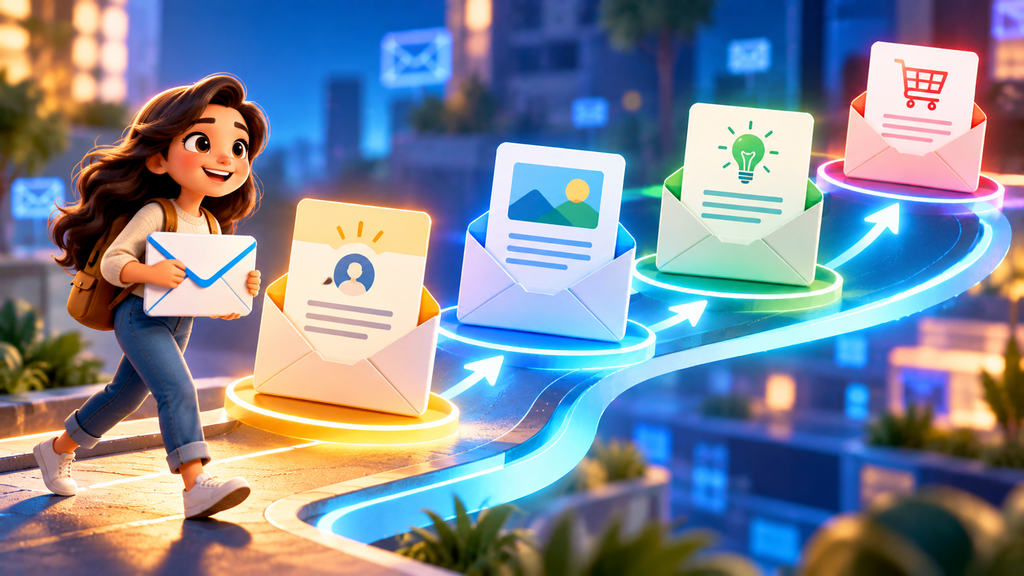
A welcome sequence shouldn’t exist merely to “warm people up” for a sales pitch.
Use it to prove that subscribing was worthwhile.
A simple sequence might look like this:
Email 1: Deliver the promised resource and explain what subscribers can expect.
Email 2: Help them solve one related problem.
Email 3: Share another useful guide, framework, or resource.
Email 4: Introduce a relevant product if it genuinely helps with what you’ve been teaching.
You don’t need exactly four emails. The point is to establish value before treating every subscriber like a potential commission.
Want to strengthen the rest of your affiliate strategy too? Explore EasyMonitize for beginner-friendly guides on affiliate marketing, blogging, SEO, AI tools, traffic, and building an online business.
5. Grow Your Affiliate Email List Organically

Once the basics are working, put your signup opportunity where relevant people can find it.
Add opt-ins to useful blog posts.
Match the lead magnet to the article instead of displaying the same generic popup everywhere.
Promote it through social content.
Share genuinely useful content first, then invite interested followers to get a deeper resource through your newsletter.
Use relevant collaborations
Guest articles, interviews, podcasts and creator collaborations can introduce you to new audiences. Make sure any promotion follows the host platform’s rules.
Mention your newsletter naturally.
Your website navigation, author bio, email signature, and high-value content can all provide appropriate signup opportunities.
Don’t obsess over list size. A smaller group that actually wants your content can be more useful than thousands of poorly matched addresses.
6. Promote Affiliate Products Without Turning Your Newsletter Into an Ad Feed
Before recommending something, ask:
Does this product actually help with the problem my subscriber is trying to solve?
If not, skip it.
When you do use affiliate links:
- Recommend relevant products
- Verify important product claims
- Don’t invent firsthand experience.
- Clearly disclose your financial relationship.
- Check the affiliate program’s email-promotion rules.
- Check your email provider’s current policies.
- Never use unauthorized coupons or incentives
A simple disclosure can explain that you may earn a commission if someone purchases through your links, at no additional cost to them.
Make disclosures easy to notice rather than burying them in fine print.
7. Pay Attention to Deliverability and Compliance
There isn’t a magic list of words that automatically sends an email to spam.
Deliverability can be influenced by factors including your sending reputation, authentication, subscriber complaints, list quality, and engagement.
Use accurate subject lines. Make unsubscribing straightforward. Keep your list permission-based and regularly review your email provider’s requirements.
Legal requirements also vary by jurisdiction. In the United States, CAN-SPAM establishes rules for commercial email, while subscribers elsewhere may be protected by other privacy and electronic-marketing laws.
Don’t assume one compliance checklist covers every audience.
How AI Can Help With Affiliate Email Marketing
AI can speed up parts of email marketing without replacing your judgment.
You can use it to brainstorm:
- Lead-magnet ideas
- Newsletter topics
- Subject-line variations
- Welcome-sequence outlines
- Calls to action
- Content repurposing ideas
- Subscriber segments
- Possible explanations for campaign trends
You can also give AI aggregated, non-sensitive campaign information and ask it to help identify patterns worth investigating.
But don’t blindly paste subscriber lists, private replies, customer records, or confidential information into an AI tool. Understand the tool’s current privacy and data-use policies first.
And never let AI manufacture personal experience:
“I’ve used this product for five years…”
isn’t something AI should add unless it’s actually true.
Use AI to assist your work—not invent your credibility.
What Email Marketing Metrics Should You Track?
Don’t judge your newsletter by subscriber count alone.
Watch:
Subscriber growth: Are relevant people joining?
Clicks: Which topics and recommendations generate genuine interest?
Conversions: Are those clicks leading to the outcomes you’re trying to achieve?
Unsubscribes and complaints: Are your emails meeting the expectations you set?
Deliverability: Are your emails successfully reaching subscribers?
Open rates can provide directional information, but privacy protections and automated activity can make them imperfect. Treat them as one signal rather than absolute proof that someone read your email.
Common Email List-Building Mistakes
Avoid turning your newsletter into a nonstop stream of affiliate promotions.
Other common mistakes include choosing an unrelated lead magnet, buying subscribers, hiding what people are signing up for, sending too many unrelated offers, ignoring unsubscribes, using misleading subject lines, and recommending products simply because they pay commissions.
There’s also no universal “perfect” sending frequency.
Weekly might work for one newsletter and not another. Choose a schedule you can maintain while still sending something worth opening.
Frequently Asked Questions
Can I put affiliate links in emails?
Sometimes. Your email provider and affiliate program may each have their own rules. Check both before sending affiliate promotions.
How many subscribers do I need before using affiliate links?
There is no universal minimum. Relevance and trust matter more than reaching an arbitrary subscriber count.
Do I need a lead magnet?
No. A strong newsletter can attract subscribers on its own. A useful lead magnet can help when it closely matches what your target audience wants.
How often should I email my list?
There is no single best frequency. Set reasonable expectations when people subscribe and choose a cadence you can consistently maintain.
Build the Relationship First
Email marketing works best when you stop thinking of subscribers as a collection of potential commissions.
They’re the people who let you into their inbox.
Respect that.
Create useful content. Make an honest promise when they subscribe. Send emails that fulfill that promise. Recommend products when those products genuinely fit what the reader needs.
The basic system is straightforward:
Useful content → clear signup promise → permission → welcome sequence → valuable emails → relevant recommendations → measurement → improvement
You don’t need a massive list to start building that system.
You need the right people—and a good reason for them to keep opening your emails.
Ready to build more than just an email list? Visit EasyMonitize for practical guides on affiliate marketing, blogging, SEO, AI tools, traffic, and building an online business without the easy-money promises.