
Building an affiliate website is one thing. Getting the right people to actually visit it is another.
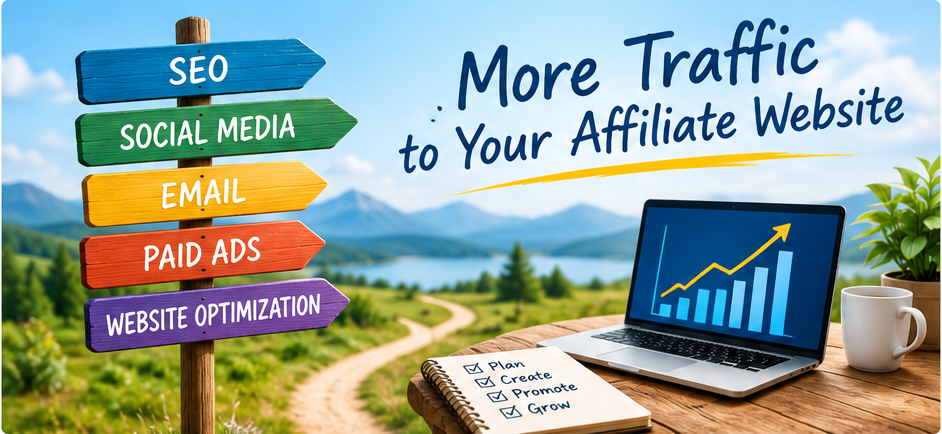
When I think about driving traffic to an affiliate website, I don’t look for a single magic traffic source. Sustainable growth usually comes from combining useful content, search visibility, social promotion, email marketing, and careful testing.
More importantly, not all traffic is equally valuable.
A thousand visitors who have little interest in what you’re recommending may be less valuable than 100 people actively researching a product you cover. That’s why I focus on attracting the right visitors, not simply increasing page views.
Whether you’re building your first affiliate site or trying to grow an existing one, these seven strategies can help you develop a more reliable traffic plan in 2026.
Affiliate Disclosure: This article contains affiliate links. If you join Wealthy Affiliate through one of my links, I may earn a commission at no additional cost to you. I recommend only products and services I have personally used or genuinely believe will add value for my readers. All opinions expressed in this review are my own.
1. Understand Your Niche and Search Intent
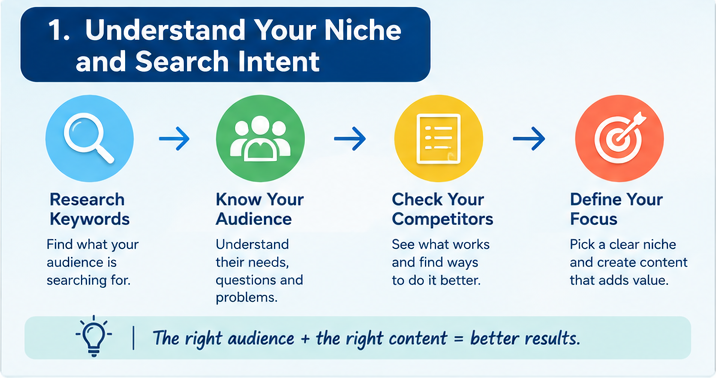
Before worrying about SEO, social media, or advertising, clarify who you’re trying to reach and what they need.
A tightly defined niche makes it easier to decide what to publish and which traffic sources to focus on.
For example, imagine you run an affiliate website about budget travel gear. Your visitors might be searching for:
- Affordable luggage recommendations
- Carry-on size comparisons
- Packing guides
- Lightweight travel accessories
- Reviews of specific products
- Alternatives to expensive travel gear
Those searches represent different types of intent.
Someone searching for “how to pack light for a two-week trip” probably wants information. Someone searching for “Brand A vs. Brand B carry-on” may be much closer to buying.
Before creating content, ask yourself:
- What problems does my audience need to solve?
- What questions do they ask before buying?
- Which products are they comparing?
- What information would genuinely help them make a decision?
- What can I add that competing articles don’t already provide?
The last question is especially important.
A successful affiliate site shouldn’t just repeat a merchant’s product descriptions. Add your own research, observations, comparisons, photographs, testing, demonstrations, pros and cons, or other useful information whenever possible.
That gives readers a reason to trust and return to your website.
2. Build Organic Traffic with SEO
For many affiliate websites, SEO can become an important source of long-term traffic.
The goal isn’t simply to insert keywords into articles. It’s to create the best possible answer for the searcher’s needs while making the page easy for search engines to understand.
Research Useful Keywords
Look for searches that naturally connect to your niche and experience.
Instead of chasing only broad terms such as:
“best laptops”
you might find more specific opportunities such as:
“best lightweight laptop for college students”
or:
“Chromebook vs. Windows laptop for students”
More specific searches can help you understand exactly what the reader wants.
Keyword research tools can provide ideas, but don’t let search volume dictate every topic you publish. A highly relevant question with modest search demand may be more useful to your business than a broad keyword attracting visitors who aren’t interested in your recommendations.
Create Original, Helpful Content
Affiliate websites need more than rewritten manufacturer descriptions.
Where appropriate, strengthen your content with:
- Personal experience
- Original photographs or screenshots
- Product testing
- Clear advantages and disadvantages
- Side-by-side comparisons
- Specific examples
- Information about who a product is and isn’t suited for
- Transparent explanations of how recommendations were selected
If you haven’t personally used a product, don’t imply that you have. Explain whether your conclusions come from research, specifications, customer documentation, demonstrations, or another source.
That transparency helps build credibility.
Strengthen Internal Linking
Internal links help readers discover related content.
For example, a beginner’s guide to choosing web hosting could naturally link to:
- Individual hosting reviews
- Hosting comparisons
- WordPress tutorials
- Website-speed guides
Think of your website as a connected resource rather than a collection of isolated articles.
Improve On-Page SEO
Give each important page:
- A descriptive title
- A clear H1 heading
- Logical H2 and H3 subheadings
- A concise meta description
- Descriptive image alt text when appropriate
- Readable URLs
- Optimized images
- A mobile-friendly layout
Don’t force the same keyword into every heading. Write naturally and cover the topic thoroughly.
Want more practical strategies for building an affiliate business? Visit EasyMonitize for beginner-friendly guides on affiliate marketing, content creation, SEO, and monetization.
3. Publish Content People Actually Want to Find
Product reviews can be useful, but an affiliate site shouldn’t consist entirely of reviews.
I prefer creating a mixture of informational and commercial content.
Product Comparisons
Comparison articles work well when readers are deciding between two or more options.
Examples:
- Product A vs. Product B: Which One Fits Your Needs?
- Free vs. Paid Website Builders
- Budget vs. Premium Travel Gear
Don’t declare a winner simply because one product pays a better commission.
Explain which option is better for which type of person.
Best-For Guides
Rather than publishing another generic “Top 10” article, narrow the recommendation to a real use case.
For example:
- Best Microphones for Beginner Podcasters
- Best Budget Travel Bags for Weekend Trips
- Best Website Builders for Freelancers
The more specific the problem, the easier it becomes to create genuinely useful content.
Tutorials
Teach readers how to accomplish something.
A tutorial can introduce a relevant product naturally without turning the entire article into a sales pitch.
Case Studies and Personal Experiences
First-hand experience can make affiliate content considerably more useful.
Show what you tried, what happened, what worked, what didn’t, and what you would do differently.
Don’t manufacture personal experience just to make an article sound authoritative. If you’re basing a recommendation on research instead of hands-on use, say so.
Update Existing Content
Don’t assume publishing more articles is always the answer.
Periodically review older content for:
- Discontinued products
- Outdated prices
- Broken links
- Changed features
- Old screenshots
- Outdated recommendations
- Incorrect dates
- Opportunities to add new experience or research
Sometimes improving an existing article can be more valuable than publishing another similar one.
4. Use Social Media and Online Communities Strategically
SEO isn’t your only source of free traffic.
Social platforms and online communities can help introduce your content to people who may never discover it through Google.
The important part is choosing platforms that actually fit your niche.
Pinterest can be particularly useful for visual topics such as:
- Food
- DIY
- Home
- Fashion
- Travel
- Crafts
Create useful visuals that lead people to relevant content on your website.
Facebook Groups, Reddit, and Forums
Communities can generate targeted exposure, but don’t treat them as free advertising boards.
Answer questions. Participate in discussions. Learn what people are struggling with.
Share your own content only when it’s relevant and permitted by the community’s rules.
YouTube
Video gives you another opportunity to demonstrate products, explain concepts, answer questions, and show first-hand experience.
A useful video can also complement a detailed article on your website.
LinkedIn and X
These platforms can make sense for business, software, marketing, technology, and professional niches.
Rather than trying to maintain an active account on every platform, I recommend starting with one or two where your audience already spends time.
Get good at those before expanding.
5. Build an Email Audience You Can Reach Directly
Search rankings change. Social algorithms change.
An email list lets you reconnect more directly with people who have already shown interest in your content.
You could encourage subscriptions by offering something genuinely useful, such as:
- A checklist
- A short guide
- A template
- A comparison worksheet
- A resource list
- A mini email course
Once someone subscribes, don’t immediately overwhelm them with affiliate offers.
Use email to share:
- New articles
- Useful tips
- Tutorials
- Product updates
- Relevant recommendations
- Occasional promotions
You can also create a simple welcome sequence to introduce new subscribers to some of your best resources.
When affiliate relationships apply to recommendations in your emails, make the relationship clear rather than assuming subscribers already know.
Your email list shouldn’t just be another sales channel. Treat it as a way to build an ongoing relationship with your audience.
6. Consider Paid Traffic Carefully
Paid advertising can generate visitors quickly, but quick traffic doesn’t automatically mean profitable traffic.
This is where new affiliate marketers can get into trouble.
You might spend $100 generating clicks and earn only $20 in commissions.
That’s not growth.
Before spending heavily on ads, understand:
- How much each visitor costs
- How visitors behave after arriving
- Which landing pages perform best
- How many visitors click your affiliate links
- What commissions you actually earn
- Whether your campaign remains profitable after advertising costs
Google Ads
Google Ads can reach people actively searching for relevant topics, but your website and landing pages must comply with Google’s advertising policies.
Avoid building thin pages that exist primarily to send visitors somewhere else. Your landing page should provide genuine, original value.
Facebook and Instagram Ads
Meta advertising can help you reach audiences based on interests and behaviors, but campaign economics stillmatter.
Consider testing a valuable article, resource, or lead-generation offer instead of immediately sending cold traffic to an aggressive sales page.
Native Advertising
Native advertising platforms can place sponsored content alongside editorial material on other websites.
Again, traffic volume isn’t enough.
Track what happens after someone clicks.
Always Check Affiliate Program Rules
Before bidding on a brand name, sending paid traffic directly to an offer, using product trademarks in an advertisement, or creating promotional campaigns, review the affiliate program’s current terms.
Different programs can have very different restrictions.
If you decide to experiment with paid traffic, start small, measure carefully, and scale only when the numbers justify it.
7. Improve the Website Visitors Land On
Driving traffic is only half the job.
What happens after someone arrives?
A confusing, slow, or untrustworthy website can waste traffic you’ve worked hard to earn.
Improve Site Speed
Compress unnecessarily large images, use reliable hosting, remove unnecessary scripts and plugins, and regularly test important pages.
Make Navigation Simple
Visitors shouldn’t need to hunt for your best content.
Use clear menus, categories, internal links, and related-content recommendations.
Make Your CTAs Useful
Instead of filling every section with BUY NOW, guide readers toward the logical next step.
For example:
- Read the Full Comparison
- See the Complete Review
- Compare the Features
- Learn How It Works
A CTA should help the reader continue their journey.
Design for Mobile Visitors
Check your pages on actual mobile devices when possible.
Look for:
- Tiny text
- Oversized images
- Buttons that are difficult to tap
- Pop-ups covering the screen
- Tables that don’t display properly
- Slow-loading elements
A technically functional mobile page isn’t necessarily a pleasant one to use.
How to Measure Affiliate Website Traffic
Don’t judge your progress by page views alone.
Use your analytics and affiliate reporting to understand what visitors actually do.
Google Search Console
Search Console can help you evaluate your performance in Google Search, including:
- Search queries
- Impressions
- Clicks
- Click-through rate
- Average position
- Pages receiving search visibility
Use these numbers as trends, not as a single ranking position.
Google Analytics
Google Analytics can help you understand where visitors come from and how they interact with your site.
Look beyond raw visitor totals.
Depending on your setup, useful measurements can include:
- Traffic sources
- Landing-page performance
- Engagement
- Important events or conversions
- New versus returning users
Affiliate Dashboard
Your affiliate program’s reporting can help connect traffic with actual business results.
Depending on the program, you may be able to monitor:
- Affiliate-link clicks
- Conversions
- Conversion rate
- Commissions
- Earnings per click
Ultimately, you want to understand which content and traffic sources produce useful outcomes, not simply which ones produce the biggest visitor count.
Common Questions About Affiliate Website Traffic
How can I get traffic to my affiliate website for free?
SEO, useful content, social media, online communities, video, and email can all generate traffic without paying for every individual click.
“Free,” however, doesn’t mean effortless.
Organic traffic requires time, research, content creation, and consistent improvement.
How long does SEO take to generate traffic?
There’s no guaranteed timeline.
A new page can gain search visibility relatively quickly or take much longer to build meaningful traffic. Competition, website authority, content quality, indexing, search demand, backlinks, and many other factors can affect performance.
Be cautious of anyone promising a specific Google ranking within a specific number of days.
Do I need thousands of visitors to make money with affiliate marketing?
Not necessarily.
Traffic quality and commercial intent matter.
A smaller audience looking for solutions to a specific problem can sometimes be more valuable than a much larger audience with little interest in the products you recommend.
Should beginners use paid traffic?
You can, but I wouldn’t treat paid advertising as a shortcut.
If you don’t understand your audience, conversion path, affiliate program restrictions, and campaign economics, paid traffic can become expensive quickly.
Which traffic source is best for affiliate marketing?
There isn’t one universal winner.
SEO may work extremely well for one niche, while YouTube, Pinterest, email, or another channel performs better for another.
Start with one or two channels that fit your audience and content style. Measure the results before adding more.
A Simple Affiliate Website Traffic Plan
If you’re starting from scratch, keep things manageable.
Step 1: Define your audience.
Know who you’re helping and what problems they need to solve.
Step 2: Research their questions.
Find informational, comparison, and buying-related topics.
Step 3: Publish genuinely useful content.
Add original experience, research, testing, examples, or analysis wherever possible.
Step 4: Optimize for search.
Make your content understandable for both readers and search engines.
Step 5: Choose one additional traffic channel.
That might be YouTube, Pinterest, Facebook, Reddit, LinkedIn, or another platform appropriate to your audience.
Step 6: Start building an email list.
Give interested visitors a reason to return.
Step 7: Measure results.
Identify which pages and channels attract engaged visitors and generate meaningful outcomes.
Step 8: Improve what already works.
Update successful articles, strengthen weak pages, improve internal links, and expand topics your audience responds to.

Final Thoughts: Build Traffic by Being Useful
Learning how to get traffic to an affiliate website isn’t about discovering a secret hack.
It’s about repeatedly creating something worth finding.
Understand your audience. Answer their questions. Publish original content. Share it where the right people spend their time. Build an email audience. Measure your results. Then improve what works.
Most importantly, don’t sacrifice reader trust for a quick affiliate click.
If people begin to see your website as a resource that genuinely helps them research products, compare choices, and make better decisions, you’re building something much more valuable than a temporary traffic spike.
Ready to keep building your affiliate business? Explore more practical affiliate marketing, SEO, content creation, and monetization guides at EasyMonitize.com and turn your next piece of content into another opportunity to grow.