
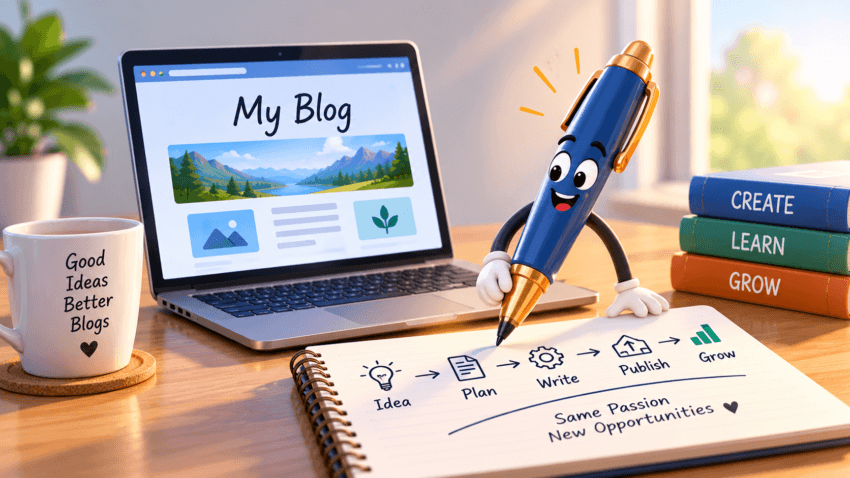
Starting a blog in 2026 isn’t simply about buying a domain and publishing articles.
Today’s bloggers compete with established websites, social media, video, AI-generated content, forums, and countless other sources of information.
But blogging still gives you something valuable: a platform you can build around your own content, expertise, audience, and brand.
Whether you want to share your experience, grow a business, build an audience, or eventually earn income, here’s how to start a blog in 2026 without making the process unnecessarily complicated.
Affiliate Disclosure: This article contains affiliate links. If you join Wealthy Affiliate through one of my links, I may earn a commission at no additional cost to you. I recommend only products and services I have personally used or genuinely believe will add value for my readers. All opinions expressed in this review are my own.

Step 1: Choose Your Blog Niche and Audience
Start by deciding who you’re helping and what you’re helping them with.
Instead of choosing a broad topic like “technology,” you might focus on:
- Technology for small businesses
- Budget travel for families
- Home organization for busy parents
- Beginner affiliate marketing
- Simple personal finance education
A focused niche helps you understand what your readers need and makes planning related content easier.
Your own experience can also become an advantage.
Ask yourself:
- What have I actually done or learned?
- What problems can I help someone solve?
- What questions do people repeatedly ask?
- Can I keep creating useful content about this subject?
You don’t have to be the world’s leading expert. But you should be transparent about what you know, what you’ve personally experienced, and what you’ve researched.
Step 2: Choose a Domain Name
Your domain is your blog’s online address.
Aim for something that is:
- Easy to spell
- Easy to remember
- Relevant to your brand
- Flexible enough for future growth
- Free from obvious trademark conflicts
You can register domains through established registrars or through some website and hosting providers.
Don’t assume the cheapest introductory price will remain the cheapest. Check renewal pricing, privacy features, transfer policies, security options, and support before registering.
You also don’t need to spend a lot on premium domains when you’re starting.
Step 3: Pick a Blogging Platform
There is no single platform that’s best for everyone.
WordPress remains a popular choice for bloggers who want substantial control over their website, themes, plugins, SEO setup, and monetization.
Other platforms and website builders may offer simpler managed experiences.
When comparing platforms, consider:
- Ease of use
- Hosting requirements
- Total ongoing cost
- Design flexibility
- SEO capabilities
- Exporting and ownership of content
- Security and backups
- Affiliate and advertising policies
- Ecommerce features
- Technical support
Think about where you want your blog to be in several years, not just which platform has the easiest setup screen.
Step 4: Choose Hosting If You Need It
Some blogging platforms include hosting, while self-hosted systems require you to arrange it separately.
If you need hosting, compare providers based on more than price.
Look at:
- Reliability
- Performance
- Backups
- Security
- Support
- Renewal pricing
- Upgrade options
There is no universal amount that a blog must cost to launch.
Your expenses depend on your domain, platform, hosting, themes, plugins, email tools, and other services. Start with what you genuinely need and add paid tools when they solve a real problem.
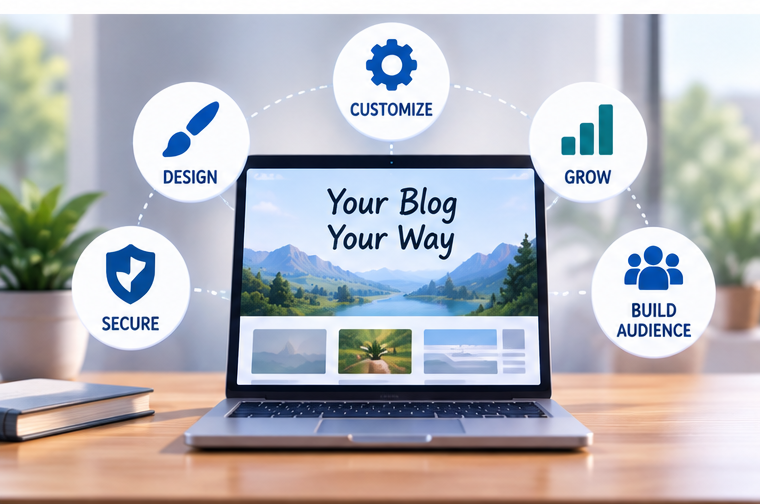
Step 5: Keep Your Blog Design Simple
You don’t need an elaborate website.
A beginner blog should make it easy for visitors to:
- Understand what the site is about.
- Find useful content.
- Read comfortably on different screen sizes.
- Learn who is behind the website.
- Contact you when necessary.
Create essential pages such as About and Contact, along with appropriate privacy, disclosure, and other policy pages for your circumstances.
Use readable typography, logical navigation, descriptive links, useful image alt text, and accessible design.
Performance matters too, but don’t chase a perfect score at the expense of usability.
Step 6: Plan Helpful Content
Before publishing, brainstorm questions your intended audience actually needs answered.
Good starting formats include:
- Beginner guides
- Tutorials
- Comparisons
- Checklists
- Case studies
- Product reviews
- Frequently asked questions
- Lessons from firsthand experience
You don’t need to publish every day—or even follow an arbitrary weekly quota.
Quality and usefulness matter more than hitting a predetermined number of posts.
Create a publishing schedule you can realistically maintain while giving each article the attention it deserves.
Want more practical ideas for building an online content business? Explore the beginner-friendly guides at EasyMonitize.
Step 7: Use AI Without Losing Your Voice
AI can be useful for bloggers in 2026, but it should be a tool rather than a substitute for judgment.
You might use AI to help:
- Brainstorm topics
- Organize outlines
- Identify questions to research
- Improve grammar
- Summarize your own notes
- Generate alternative headlines
- Assist with repetitive tasks
But don’t assume AI-generated information is accurate.
Fact-check important claims, verify sources, add your own experience and analysis, and make sure the finished article genuinely helps the reader.
Publishing large amounts of generic content simply because AI makes it fast isn’t a strong long-term content strategy.
Your competitive advantage is what you contribute: experience, testing, examples, research, opinions, original images, data, or insights.
Step 8: Build E-E-A-T and Trust
E-E-A-T stands for Experience, Expertise, Authoritativeness, and Trustworthiness.
For bloggers, that means giving readers reasons to trust the content.
You can strengthen credibility by:
- Identifying authors
- Creating useful author/about pages
- Citing reliable sources
- Correcting outdated information
- Explaining how products were evaluated
- Showing firsthand experience when you have it
- Clearly separating facts from opinions
- Avoiding claims you can’t substantiate
Never pretend you’ve used a product when you haven’t.
If an article is based primarily on research, say so and explain how you evaluated it.
Step 9: Learn SEO Fundamentals
SEO isn’t about stuffing keywords into articles.
Start with fundamentals:
- Understand search intent
- Write descriptive titles and headings
- Create original, useful content
- Use logical internal links
- Write helpful page descriptions
- Make images accessible
- Keep your site technically functional
- Update outdated information
Write primarily for the person visiting your page.
Search engines can drive valuable traffic, but avoid making your entire business depend on a single source.
Step 10: Promote Your Blog
Publishing is only part of blogging.
Depending on your audience, you could attract visitors through:
- Search engines
- YouTube
- Social media
- Relevant online communities
- Partnerships
- Guest contributions
Don’t spam communities with links. Participate where you can genuinely contribute.
Building an email audience also gives you a direct way to reconnect with readers, rather than relying entirely on algorithms.
Can You Make Money Blogging in 2026?
Yes, blogs can be monetized, but income isn’t guaranteed.
Possible monetization methods include:
- Affiliate marketing
- Display advertising
- Sponsorships
- Digital products
- Courses
- Memberships
- Consulting or services
- Physical products
Don’t assume you need huge traffic before earning anything. Some specialized blogs can generate leads or affiliate conversions with relatively small but highly relevant audiences.
At the same time, don’t expect publishing a handful of posts to create passive income.
Building a profitable blog can require substantial experimentation, content development, audience building, and ongoing maintenance.
Affiliate Disclosure Matters
If you use affiliate links, disclose your financial relationship clearly.
A simple disclosure could say:
“I may earn a commission if you purchase through links in this article.”
Place disclosures where readers are likely to notice and understand their connection to your recommendations.
Frequently Asked Questions
How much does it cost to start a blog in 2026?
There isn’t one standard price. Costs depend on your domain, platform, hosting, design, and optional tools. A simple blog can be inexpensive, while premium hosting, themes, software, and professional services can raise the cost considerably.
Do I need coding skills?
Usually not. Modern blogging platforms allow beginners to create and manage websites without writing code. Basic HTML or CSS knowledge can still be useful later.
How often should I publish?
There is no universal ideal frequency. Choose a schedule that lets you consistently produce accurate, useful content without sacrificing quality.
How long does it take to get blog traffic?
There is no guaranteed timeline. Results depend on your niche, competition, content, promotion, existing audience, search visibility, and other factors.
Final Thoughts: Starting a Blog in 2026
Starting a blog doesn’t require dozens of expensive tools or hundreds of articles.
Start with a clear audience, useful niche, reliable platform, simple website, and a small collection of genuinely helpful content.
Then learn from what happens.
Watch which topics attract visitors. Listen to reader questions. Improve older content. Develop your expertise. As your audience grows, experiment with traffic sources and monetization methods.
AI and search platforms will continue changing, but the basic principle remains useful:
Create something worth visiting.
That’s a stronger foundation than chasing every algorithm update or blogging trend.
Ready to take the next step? Visit EasyMonitize for practical guides on blogging, affiliate marketing, online tools, and building sustainable online income strategies.