

Starting an online business sounds exciting until you start thinking about everything you might need.
A website. Expensive software. Marketing skills—money for advertising.
But what if you don’t have any of those?
The good news is that some online business ideas for beginners require little more than a useful skill, an internet connection, and the willingness to learn.
The challenge is choosing something realistic.
Some businesses let you earn by providing services. Others involve creating products or content that may generate income over time.
Let’s explore your options, what they actually cost, and how to choose a business that fits your situation.
Affiliate Disclosure: This article contains affiliate links. If you join Wealthy Affiliate through one of my links, I may earn a commission at no additional cost to you. I recommend only products and services I have personally used or genuinely believe will add value for my readers. All opinions expressed in this review are my own.
Can You Really Start an Online Business With No Money?
Yes, you can start some online businesses using free tools and platforms.
But starting for free doesn’t mean you can operate forever without expenses.
You may eventually need to pay for website hosting, marketplace fees, payment processing, software, or other business costs.
Even if you spend nothing upfront, you’re investing something valuable: your time.
The goal isn’t to find a business that requires no effort. It’s to find one you can afford to start, test, and improve.
9 Online Business Ideas for Beginners
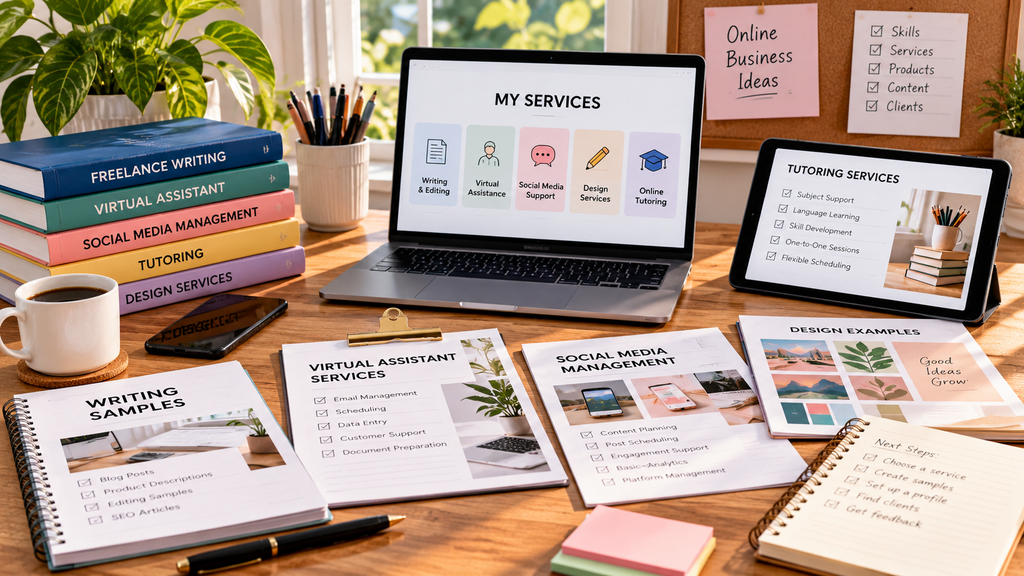
1. Freelance Writing or Editing
Startup cost: Very low
If you enjoy writing, consider offering services such as blog writing, proofreading, editing, or product descriptions.
You don’t necessarily need a website to begin. A few strong writing samples can help potential clients evaluate your work.
The challenge is finding customers and demonstrating that you can deliver useful, accurate content.
Best for: People who enjoy researching, writing, and improving written material.
2. Virtual Assistant Services
Startup cost: Very low
Virtual assistants help businesses handle administrative tasks remotely.
Services might include:
- Email organization
- Appointment scheduling
- Data entry
- Customer support
- Document preparation
Start by offering tasks you’re already comfortable with.
As you gain experience, you may specialize in areas such as e-commerce administration or customer service.
Best for: Organized people who enjoy helping businesses run smoothly.
3. Social Media Management
Startup cost: Low
Small businesses sometimes need help managing their social media accounts.
You could offer content scheduling, basic graphics, comment moderation, or performance reporting.
However, knowing how to use social media personally doesn’t automatically qualify you to manage business accounts.
Learn platform rules, content planning, and basic analytics before offering services.
Best for: Creative beginners who enjoy communication and content planning.
4. Online Tutoring
Startup cost: Low
If you’re knowledgeable in a school subject, language, or practical skill, online tutoring may be worth exploring.
You could offer individual sessions through video calls or use a tutoring platform.
Your qualifications and any applicable teaching, safeguarding, or licensing requirements will depend on what you teach and where you operate.
Best for: People who enjoy explaining concepts and helping others learn.
5. Sell Digital Products
Startup cost: Low or potentially free
Digital products include downloadable resources that customers can purchase and use repeatedly.
Examples include:
- Budget spreadsheets
- Printable planners
- Resume templates
- Content calendars
- Short educational guides
You create the original resource, list it for sale, and deliver it digitally.
But don’t confuse easy delivery with easy sales.
You’ll still need a useful product, clear descriptions, and a way for customers to discover it.
Best for: People who enjoy organizing information, designing resources, or solving practical problems.
6. Start a Blog
Startup cost: Free on some platforms; additional costs possible
Blogging allows you to build content around a subject you enjoy or understand.
Over time, a blog may earn through advertising, affiliate marketing, sponsorships, or digital products.
But building an audience requires patience.
You’ll need to research topics, publish helpful articles, understand basic SEO, and maintain your content.
Search traffic isn’t guaranteed, and some blogs never become profitable.
Best for: People who enjoy writing and are comfortable building something gradually.
Interested in blogging as an online business? Explore EasyMonitize’s guide to starting a blog for practical beginner steps.
7. Affiliate Marketing
Startup cost: Low or potentially free
Affiliate marketing involves recommending products or services through tracked links.
You may earn a commission when someone completes a qualifying purchase or action.
You don’t need to manufacture products or handle shipping.
However, you do need to attract the right audience and provide recommendations people can trust.
You can use a blog, social media, or other channels permitted by the affiliate program.
Always disclose affiliate relationships clearly and follow applicable advertising requirements.
Best for: People who enjoy creating helpful content and researching products.
8. Print-on-Demand Products
Startup cost: Low to moderate
Print-on-demand services produce items such as shirts, mugs, or posters after customers place orders.
This reduces the need to buy inventory upfront.
However, you’re still responsible for understanding product quality, pricing, customer expectations, and platform policies.
Competition can be significant, and marketplace fees or advertising expenses may reduce profits.
Best for: People interested in design and niche audiences.
9. Dropshipping
Startup cost: Low to moderate, potentially higher with advertising
Dropshipping lets you sell products without storing the inventory yourself.
When a customer places an order, a supplier fulfills it.
That sounds convenient, but the business still comes with responsibilities.
You need to manage customer expectations, supplier reliability, returns, product quality, and applicable consumer protection requirements.
Thin margins and marketing costs can make dropshipping difficult for beginners with very limited budgets.
Best for: People willing to learn e-commerce operations, manage suppliers, and handle customer service.

Which Online Business Is Best for Beginners?
The best choice depends on whether you want to sell your time, create products, or build an audience.
| Freelance writing | Very low | Finding clients |
| Virtual assistance | Very low | Building trust and securing clients |
| Social media management | Low | Demonstrating results |
| Online tutoring | Low | Finding students |
| Digital products | Low | Attracting buyers |
| Blogging | Low | Building readership |
| Affiliate marketing | Low | Earning audience trust |
| Print on demand | Low to moderate | Competition and margins |
| Dropshipping | Low to moderate | Suppliers and operating costs |
These are general estimates. Actual expenses depend on your location, tools, platform, and business model.
If you need income sooner, offering a service may provide a more direct route to paying customers.
If you’re comfortable investing time before seeing results, blogging or digital products may be worth exploring.
Neither guarantees success.
How to Choose Your First Online Business
Before committing, ask yourself four questions.
1. What skills do I already have?
You may be better prepared than you think.
Writing, organizing information, communicating with customers, and managing spreadsheets are all useful abilities.
2. How much money can I afford to spend?
Don’t invest money you need for essential expenses.
Start with free or low-cost options when practical, and check fees before committing.
3. How quickly do I need income?
Service businesses can pay you directly for completed work.
Content-based businesses often require longer audience-building periods.
4. What kind of work would I enjoy doing repeatedly?
Choose something that matches your interests and working style.
A business that looks profitable won’t help much if you dislike the work required to maintain it.
How to Start an Online Business in 7 Days
You don’t need to launch a complete company in one week.
Instead, use your first seven days to test an idea.
Day 1: Choose One Business Idea
Pick one option and identify the audience you want to help.
Day 2: Research Your Market
Look at existing businesses, customer problems, competing offers, and potential demand.
Competition alone doesn’t prove that your particular offer will sell.
Day 3: Set Up the Basics
Create a professional contact method and a simple portfolio, profile, or product page.
Check whether your activity requires business registration or other legal steps in your location.
Day 4: Create Something Useful
Prepare a writing sample, service package, digital product, or first blog article.
Day 5: Get Feedback
Show your work to people who resemble your target audience.
Ask what’s useful, confusing, or missing.
Day 6: Publish or Reach Out
Publish your first offer or contact potential clients with a relevant, personalized message.
Avoid unsolicited bulk messages.
Day 7: Review and Improve
Look at the feedback you’ve received and identify your next practical step.
Your first week is about making progress, not guaranteeing your first sale.
Common Online Business Mistakes Beginners Should Avoid
Starting too many businesses at once. Focus on one idea long enough to learn whether it has potential.
Spending too much before testing demand. Expensive software and branding won’t compensate for an offer nobody wants.
Expecting immediate income. Customer acquisition, content creation, and business development take time.
Copying competitors. Research the market, but create original products, content, and services.
Ignoring operating costs. Include platform fees, refunds, taxes, and other obligations in your planning.
Giving up without learning from feedback. If something isn’t working, investigate the problem before deciding what to change.
Frequently Asked Questions
What is the easiest online business to start with no money?
Freelance services and virtual assistance can be practical starting points if you already have relevant skills and access to the necessary equipment.
Can beginners make money online without experience?
Yes, but you still need to offer something people value. Beginners may need to build skills, create samples, and find customers before getting paid.
Is blogging still worth starting?
Blogging can be worthwhile for people who enjoy creating helpful content and understand that audience growth and monetization are uncertain.
Do I need a website to start an online business?
Not always. You can offer some services and products through established platforms, though they may charge fees or impose restrictions.
Final Thoughts: Start With What You Have
You don’t need a large budget or years of business experience to explore an online business.
But you do need a realistic plan.
Start with your existing skills, choose one problem you can help solve, and test your idea before spending heavily.
Whether you begin with freelancing, digital products, blogging, or affiliate marketing, focus on creating something genuinely useful.
You can always expand once you understand what works.
Want to explore an online business without creating your own products? Read EasyMonitize’s Affiliate Marketing Without a Website Guide to understand the opportunities and limitations.