

Wouldn’t it be nice to earn extra money from something you created months ago?
That’s the appeal of passive income. You do the work once, and the results might continue paying you later.
But one part often gets left out: the work comes first, and the income isn’t guaranteed.
A blog needs useful articles to attract readers. You need to create a digital planner before anyone can buy it. And an online course needs lessons worth paying for.
If you’re looking for passive income ideas, you can start from home with little money and no experience, you have options.
You need to understand what each one actually requires.
Affiliate Disclosure: This article contains affiliate links. If you join Wealthy Affiliate through one of my links, I may earn a commission at no additional cost to you. I recommend only products and services I have personally used or genuinely believe will add value for my readers. All opinions expressed in this review are my own.
What Is Passive Income, Really?
Passive income generally refers to earnings that don’t require you to exchange time for money with every transaction.
For example, you might create a digital template once and sell copies of it repeatedly.
But that doesn’t mean you can stop working altogether.
You may still need to update the template, answer customer questions, promote your products, or handle technical issues.
For beginners, think of these opportunities as income streams that may become less hands-on over time.
And remember: the everyday meaning of passive income isn’t necessarily the same as its tax classification.
7 Passive Income Ideas You Can Start From Home
Here are seven options worth considering, starting with some of the simplest.
1. Sell Digital Printables
Startup cost: Low or potentially free
Printables are downloadable files people can use at home.
Examples include budget planners, meal planners, habit trackers, and printable checklists.
You can create basic designs with free document or design tools and sell them through an online marketplace or your own website.
The challenge isn’t necessarily making the printable. It’s finding people who want it.
Beginner tip: Choose a specific audience. A budget planner for freelancers with irregular income may be more useful than a generic planner.
2. Create and Sell Templates
Startup cost: Low or potentially free
Templates help people complete tasks without starting from scratch.
You could create:
- Blog post planning templates
- Monthly budget spreadsheets
- Social media content calendars
- Small business expense trackers
Templates can be especially useful when they solve a recurring problem.
You’ll still need to explain how they work, provide support when necessary, and keep them compatible with the tools customers use.
3. Write a Short Ebook or Guide
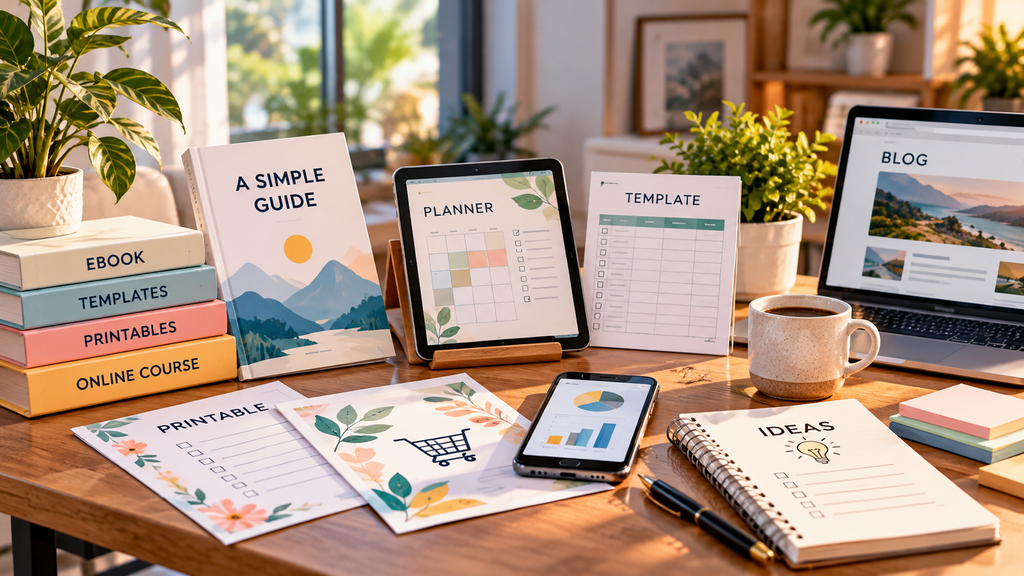
Startup cost: Low
You don’t need to write a 200-page book to create something useful.
A focused guide that solves one problem can be a reasonable starting point.
For example, you could write a beginner’s guide to organizing digital files, planning affordable meals, or managing a household budget.
Choose a topic you understand well or can research responsibly.
Avoid presenting yourself as an expert in areas where you lack the necessary qualifications.
And don’t overlook editing, formatting, and a clear product description. They all affect the reader’s experience.
4. Start a Blog
Startup cost: Free to start on some platforms; ongoing costs possible
Blogging is one of the more flexible ways to build an online income stream.
You publish useful content around a topic and work toward attracting an audience.
Depending on your content, audience, and eligibility, you may eventually earn through affiliate marketing, advertising, or your own digital products.
However, blogging is rarely passive at the beginning.
You’ll spend time researching topics, writing articles, learning SEO, and improving older content.
Search visibility takes time, and some websites never get meaningful traffic.
Beginner tip: Choose a subject you can write about consistently, even before it earns anything.
5. Try Affiliate Marketing
Startup cost: Low or potentially free
Affiliate marketing involves recommending products or services through special tracking links.
When someone completes a qualifying purchase or action, you may earn a commission.
You don’t need to create or ship the product yourself.
You can promote affiliate offers through a blog, social media, or other permitted channels, depending on the program’s rules.
But there’s a catch.
You still need an audience that trusts your recommendations.
Focus on genuinely useful content, explain product limitations, and clearly disclose affiliate relationships.
Want to explore this option? Read EasyMonitize’s Beginner’s Guide to Affiliate Marketing for practical steps to getting started.
6. Create a Small Online Course
Startup cost: Varies by platform and production needs
If you already know how to do something useful, you can turn that knowledge into a reusable product with an online course.
You might teach a practical skill through short videos, written lessons, or downloadable exercises.
You can sell courses repeatedly, but creating one takes planning and effort.
You’ll also need to consider student questions, updates, accessibility, and platform fees.
For someone starting without relevant experience, a short guide or template is usually a more manageable first project.
7. Build a Niche Resource Website

Startup cost: Low to moderate
A niche website focuses on a particular audience or subject.
Instead of covering everything, you might create a resource site about beginner gardening, home organization, or affordable hobbies.
Over time, useful pages could attract visitors and support affiliate recommendations, advertising, or digital product sales.
The difference between this and a personal blog is mainly the focus: a niche resource site is built around answering a specific audience’s questions.
Like blogging, it requires ongoing content development and maintenance. Earnings are uncertain.
Which Passive Income Idea Is Best for Beginners?
There’s no single best choice.
It depends on your budget, available time, interests, and willingness to learn.
| Printables | Low to moderate | Customer support, promotion |
| Templates | Low to moderate | Updates, support, promotion |
| Ebooks | Moderate | Promotion, revisions |
| Blogging | High | Content updates, SEO, maintenance |
| Affiliate marketing | Moderate to high | Content, audience building |
| Online courses | High | Support, updates |
| Niche websites | High | Content, technical maintenance |
These are general comparisons, not guarantees. For example, a complicated template can take longer to create than a short ebook.
If you’re working with almost no budget, printables or templates may be practical first experiments.
If you enjoy writing and researching, blogging or affiliate content might be a better long-term fit.
Can You Start Passive Income With No Experience?
Yes, you can start learning and building without previous business experience.
That doesn’t mean you’ll earn immediately.
Many beginner-friendly projects involve skills you can develop gradually, like clear writing, accurate research, basic design tools, and understanding what customers need.
Start with something small enough to finish.
You don’t need to master every skill before beginning, but you do need to be honest about what you know.
How to Choose the Right Passive Income Idea
Before committing to an idea, ask yourself four questions.
1. What can I afford to spend?
Consider platform fees, transaction charges, domain registration, hosting, and optional software. Free tools may still have usage or commercial licensing restrictions.
2. How much time can I realistically commit?
Choose a project that fits your actual schedule, not an ideal one.
3. What do I enjoy creating?
If you like organizing information, try templates. If you enjoy explaining things, consider guides or blogging.
4. How will people discover it?
A finished product won’t automatically attract customers. Think about search traffic, marketplaces, social media, or an existing audience.
This last question is especially important.
Creating something is only half the challenge. Getting it in front of interested people is the other half.
Your First 30 Days: A Practical Starting Plan
You don’t need a complicated business plan to test your first idea.
Week 1: Choose One Idea
Pick a specific audience and one problem you want to help solve.
Look at similar products or websites to understand what’s already available.
Week 2: Create a Small First Version
Make one useful printable, a basic template, an ebook outline, or your first blog article.
Focus on quality rather than quantity.
Week 3: Publish or Prepare to Launch
Publish your completed product or article.
If it isn’t ready, finish the essential work rather than rushing out something incomplete.
Week 4: Review and Improve
Check whatever meaningful feedback is available.
That might include product views, customer questions, website visits, or direct comments.
Make improvements and decide what to create next.
The goal after 30 days isn’t necessarily to earn money. It’s to publish something useful and get a clearer idea of what to improve.
Common Passive Income Mistakes to Avoid
Beginners often run into the same problems:
- Starting several projects without finishing one.
- Paying for expensive tools before validating an idea.
- Expecting immediate sales or website traffic.
- Copying products instead of creating original value.
- Ignoring marketplace rules, licensing, or affiliate disclosures.
- Forgetting about taxes, refunds, and ongoing maintenance.
Treat your first project as an opportunity to learn, not a guaranteed source of income.
Frequently Asked Questions
What is the easiest passive income idea to start from home?
Simple printables and templates are often manageable starting points because you can create them with basic tools. Selling them successfully still takes effort.
Can I start passive income with no money?
You can experiment with some free tools and platforms, but selling products may involve transaction fees, platform charges, or other costs.
How long does it take to earn passive income?
There’s no reliable timeline. Some projects attract buyers relatively quickly, while others take much longer or never become profitable.
Is affiliate marketing passive income?
Affiliate content can continue generating commissions after publication, but attracting an audience, maintaining content, and following program rules require ongoing work.
Final Thoughts: Start Small, Then Build
Passive income isn’t about finding a shortcut that eliminates work.
It’s about creating something useful that may continue producing value after the initial effort.
For beginners with limited money, digital products, blogging, and affiliate marketing offer different ways to experiment without investing heavily in inventory.
Choose one idea, give yourself time to learn, and avoid investing heavily in inventory people actually need.
You may not earn anything right away. But you’ll gain experience that can help you make better decisions about what to create next.
Interested in starting without building a website? Explore EasyMonitize’s Affiliate Marketing Without a Website Guide to understand the options and limitations.